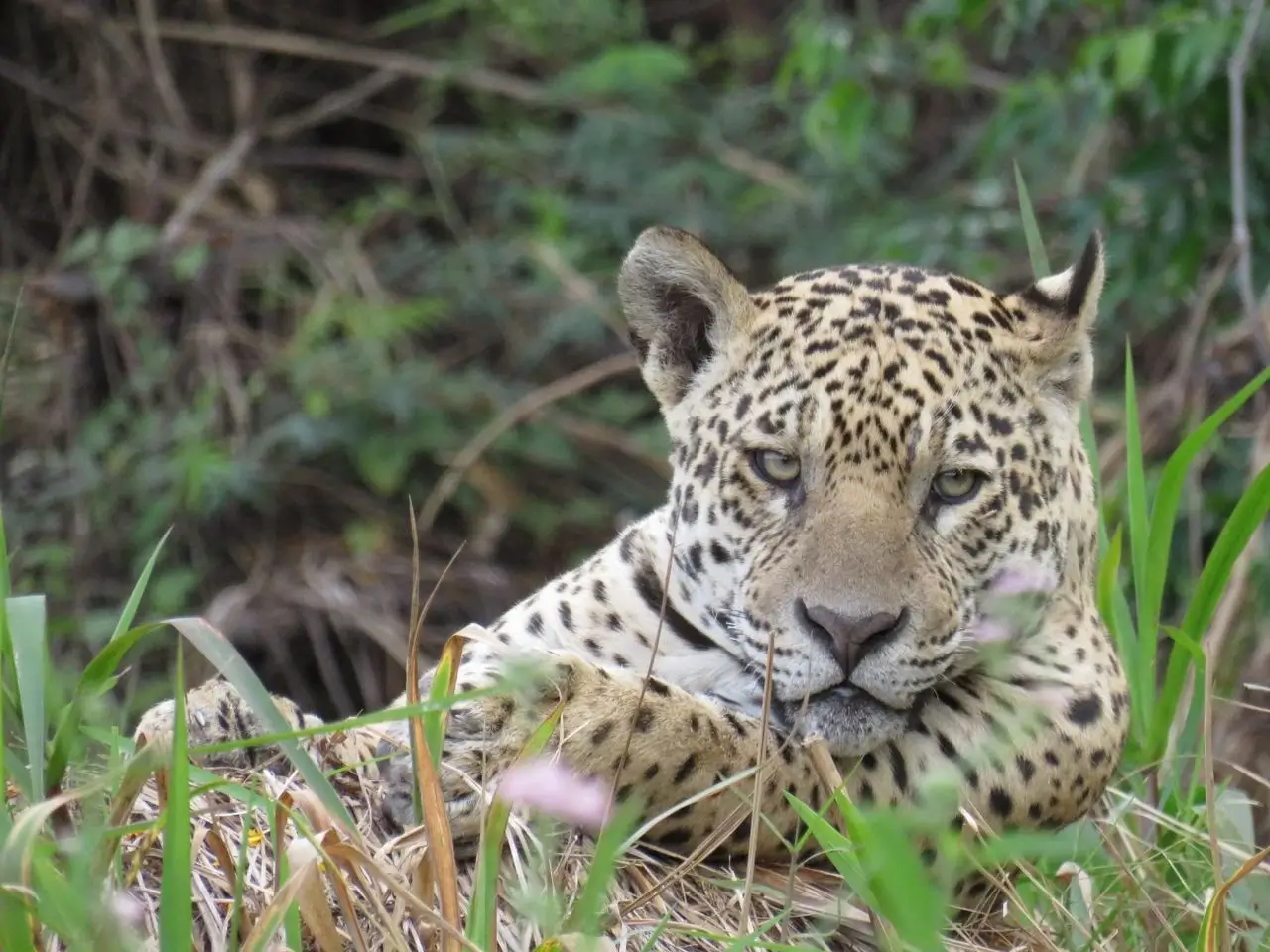
Morning rose slowly over the forest. The light, still pale after the dampness of the night, slipped through the broad leaves of the trees, touching with equal delicacy the leaf-covered ground, the roots pushing through the soil and the blades of grass, where droplets of water gleamed like fragments of glass. The air held the heavy scent of the rain that had fallen overnight, mingled with the fragrance of flowers that had opened in the darkness and the deep, earthy smell of freshly turned soil. Beyond the thicket, the river carried its waters through the forest with the steady murmur that wild places have known long before humans gave them names.
Mateo walked slowly along a path he had known for years, following the marks left by water in the mud and listening to the forest waking around him. He knew some of its sounds and had learned to distinguish the calls of birds from the rustling of animals hidden in the vegetation. He knew where the ground became slippery after rain and which trees offered shelter when the weather changed, but that morning he was about to encounter a creature the forest had kept hidden from him until then.
At first, the sound was so faint that it almost disappeared among the leaves. Then it came again — a thin, trembling whimper, like a fragile thread of a voice trying to make its way through the undergrowth without knowing whether anyone would hear it. The forest gave no sign that it had answered the sound. And yet, it seemed to know that the sound had been left there for someone. The boy stopped and listened, then followed it through ferns and wet roots until he reached a tree brought down by the storm.
Beneath its roots, in a small, dark shelter where leaves, earth and water had gathered, lay a jaguar cub.
He was so small that his body seemed almost out of place in the vastness of the forest around him, while the mud-streaked, wet fur made his dark rosettes almost disappear into the shadow under the roots. He tried to retreat deeper into the shelter, instinctively pressing himself against the damp wood, his eyes following every movement the boy made with the primal alertness no wild animal needs to be taught.
For a few moments, Mateo simply stood there, unsure what to do. Before him was a life so fragile that his first instinct was to pick it up and carry it away from the cold, the rain and the dangers of the forest; at the same time, he understood that a wild animal must first be understood before it can be touched. That hesitation would remain, in fact, the first lesson the forest gave him. He stepped back and went for help.
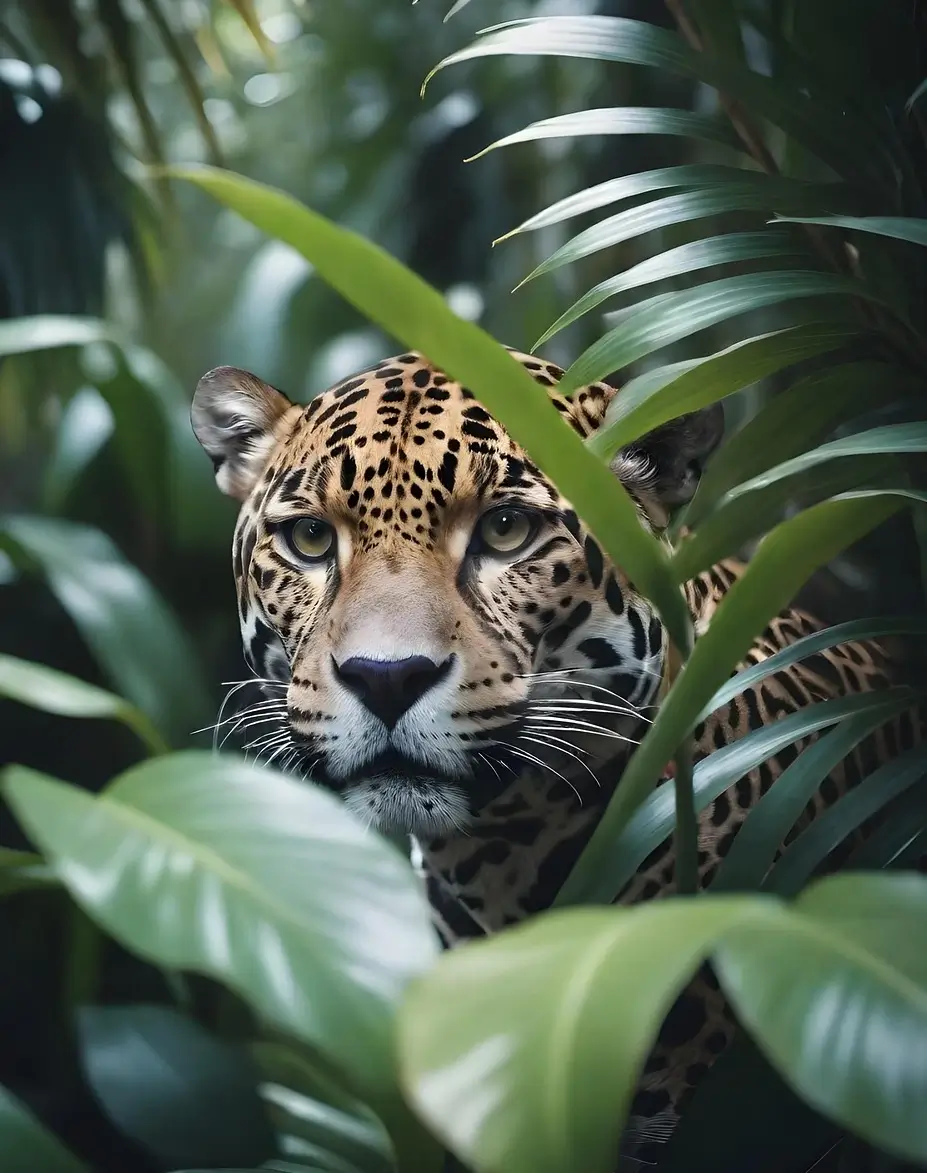
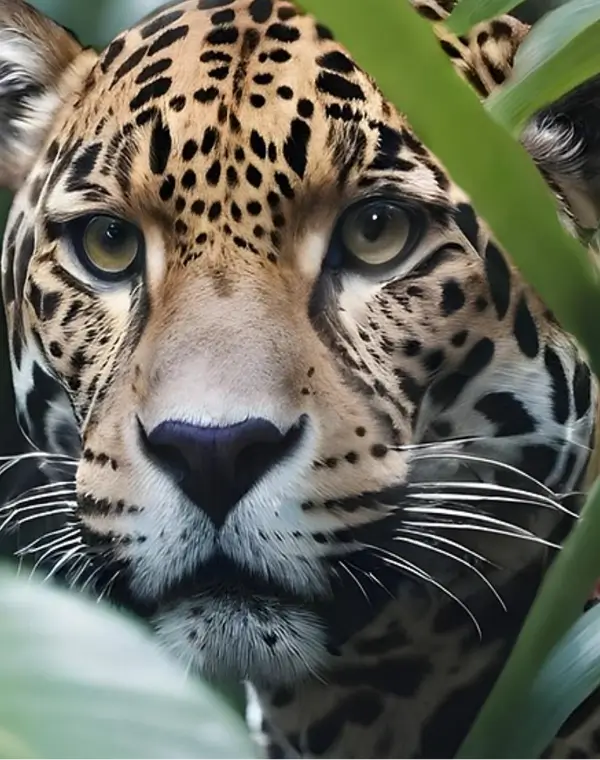
The cub was taken to a wildlife rehabilitation center, where his condition was assessed by people accustomed to caring for animals for whom human proximity can, over time, become as dangerous as the injury that brought them there. Their purpose seemed simple only on the surface: Yuma had to recover, grow and relearn what the forest could never teach through words — how to track, how to wait, how to hide, how to use his body and, above all, how to live without the help of the person who had saved him.
Mateo began visiting the rehabilitation center almost every day. At first he watched from a distance, without trying to come closer, but gradually he learned the hours when Yuma was fed, the places where he liked to hide and the way he reacted to sounds coming from the forest. He watched him grow through the space between himself and the enclosure, and the distance that had seemed unfair to him at first slowly became part of what he, too, was learning.
He gave him the name Yuma. It was a name he spoke only occasionally, more for himself than for the animal, as though he wanted to preserve, in a single word, the memory of that morning when he had found him underneath the roots of the fallen tree.
As the months passed, the cub began to change. His body grew longer, his paws stronger, and his movements acquired the precision of an animal beginning to discover its own territory. Play became practice, curiosity turned into instinct, and each passing day took him a little further from the frightened cub the boy had found in the forest.
Less the animal needed him, the more the purpose of the rescue was being fulfilled.”
Mateo was beginning to understand that Yuma was growing towards a future that would inevitably take their paths in opposite directions. The thought hurt him, although he was not yet ready to give it a name.
At first, Yuma would search for him with his eyes whenever he saw him approaching the edge of the enclosure. He would stop playing, lift his head slightly and remain attentive for a few moments, as though he recognized in that familiar figure something from the world before the center. With time, however, his reactions began to change. Sometimes he continued following a trail across the ground without looking up; at other times he disappeared among the vegetation within the rehabilitation enclosure and returned a few minutes later, absorbed in concerns of his own.
Mateo watched these changes with a mixture of happiness and a sadness he could not quite explain. He understood that this very distance was one of the signs that Yuma was recovering. Less the animal needed him, the more the purpose of the rescue was being fulfilled. That was the hardest part of rehabilitation: accepting that, in the end, being saved meant no longer being needed.
Around Yuma, the people at the center worked with the patience of those who understood that rehabilitating a wild animal required more than healing an injury. They watched him without invading his space, observing his behavior, the way he responded to sounds and scents, the way he used his body and attention when he was given food. Every stage was planned with a day still to come in mind: the day when the fences would disappear.
Yuma had to learn to hunt again. At first, the exercises were simple. Food was hidden in different places, making him search, wait and work for his meal; sometimes it was placed higher up among the branches to encourage climbing and strengthen his limbs, while at other times it was left where he had to follow its scent before finding it. To people, these might have seemed like simple exercises. For Yuma, each one meant rediscovering an ability on which his life would depend. He was beginning to read tracks and scents, the movement of vegetation and every change in the world around him.
Later came the more difficult exercises, in which prey had to be tracked and captured. Yuma was learning to wait, to conceal his intention, to conserve his strength for the right moment and to use the terrain to his advantage. In those moments, Mateo began to see in him something that could no longer be confused with the fragile animal he had found one morning beneath the roots of a tree. He could see the ancient strength of a predator reclaiming, step by step, its place in the jungle.
Sometimes Mateo wondered whether Yuma remembered him, but there was no way of knowing. Perhaps a jaguar does not hold the same kinds of connections that humans build around names, encounters and farewells. Perhaps what Yuma retained was a succession of scents, sounds, spaces and sensations, each belonging to a particular period of his life.
Then Mateo began to understand that what he felt for Yuma must never become a burden to the animal. He could love him without asking anything of him, recognize him without calling him, and remain close without becoming necessary to him. Love, in its purest form, asks for neither gratitude nor closeness, nor even remembrance.
That was the hardest part. While Mateo was learning how to draw closer to Yuma without touching him, Yuma was learning how to move away from people without looking for them.And both of them had to learn the same thing, each in his own way: that the road to freedom begins when the bond between two beings can exist without becoming a cage.
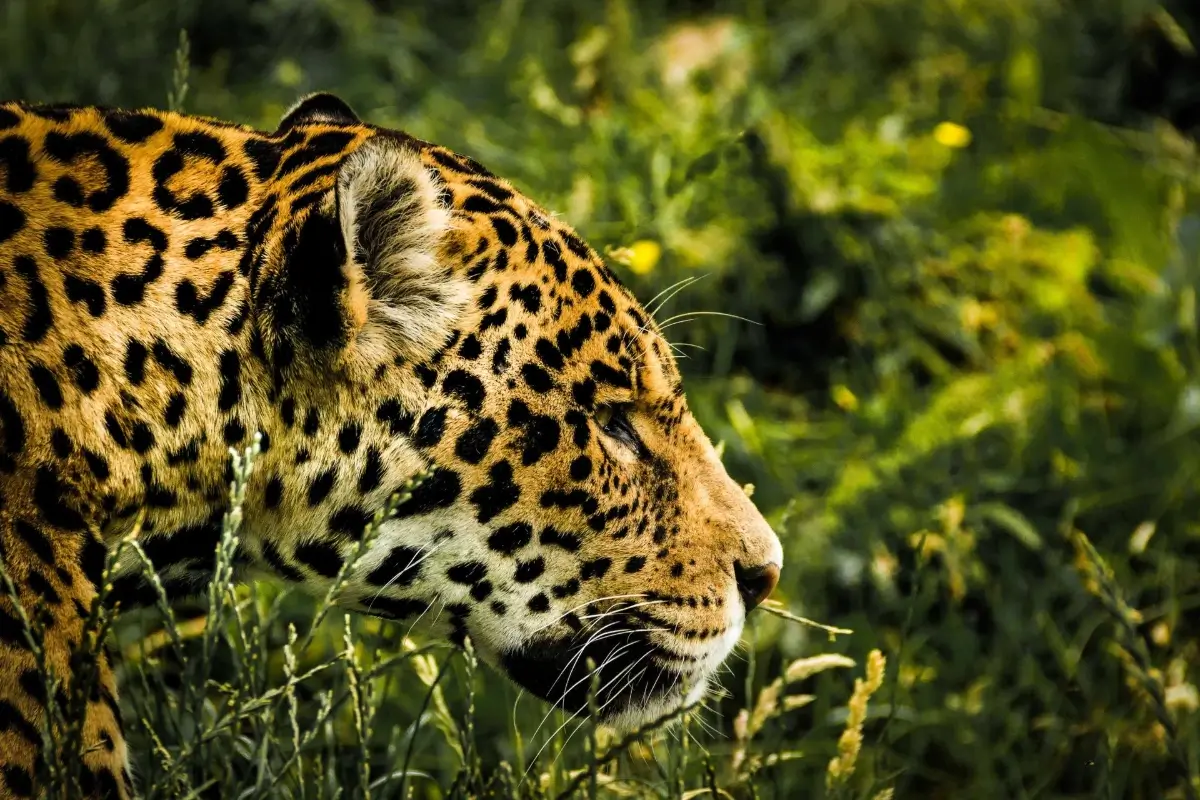
Other months passed, and Yuma had grown strong. His coat gleamed in the morning light, his gait was sure, and he moved through the vegetation with such natural ease that at times it was almost impossible to follow him with the eye. He marked his territory, recognised the scents of other animals and had become increasingly alert to everything happening around him.
One afternoon, Mateo watched him disappear among the dense leaves and, for the first time, had the feeling that the forest had already begun to recognize him. Yuma was not yet ready for that vastness without fences or people, but each day was carrying him closer to it. Mateo knew that somewhere beyond all the exercises and all the months he had spent watching him grow, the moment they had both been waiting for without ever speaking of it was drawing near.
He was beginning to read tracks and scents, the movement of vegetation and every change in the world around him.
A few weeks later, the people at the center told him that Yuma was ready for the final stage. His release habitat had been selected, the necessary assessments had been completed, and the animal was responding well to everything he needed to know to survive on his own. Mateo listened without saying a word, trying to receive the news with the same happiness with which he had awaited it throughout those months, although he now understood that the day they had all been preparing for was also the day he would lose him.
On the morning of the departure, the forest seemed almost unchanged from the day he had found him: the air was damp, light filtered through the canopy, and the earth held the scent of wet leaves and vegetation that had grown without needing anyone.
Only Mateo was no longer the same. He remained beside Yuma's enclosure longer than usual, watching the way the animal moved through the space he had inhabited for the past months. The jaguar had become so sure of himself that at times it seemed as though every movement belonged to a world in which humans had never had a place. He lifted his muzzle to scent the air, followed the scents carried on the wind, paused beside trees and listened, while Mateo watched with overwhelming emotion, knowing that these very gestures were proof that the time had come.
For the first time since he had found him under the roots of the tree, Mateo did not want Yuma to come closer. He wanted only for him to be ready to leave.
The journey to the release site was long. Yuma was in a transport crate at the back of the vehicle, while Mateo watched through the window as the landscape slowly changed, settlements growing fewer, roads narrowing and vegetation stretching ever farther. Beyond the glass, the human world was receding, and with every mile the forest seemed to reclaim the space it had lost behind them.
When they arrived, the site had been carefully chosen, far from roads and settlements, in a habitat that could give Yuma what the center never could: space, water, shelter and the possibility of shaping a life of his own. The people prepared everything without haste, checking the surroundings once more. Mateo stood a little way back, his hands clasped together. He did not want to cry. He was sad, but he understood that his sadness belonged to the parting, while that day belonged to Yuma.
The crate was placed at the edge of the forest. Mateo looked at the closed door and, for the first time, remembered with absolute clarity the morning when he had found the cub hidden among the roots. Yuma had been so small then that he could almost fit in Mateo's arms; now, behind that door, was a powerful animal, his body ready for the forest and his instincts carefully preserved by the people at the center.
Between those two images lay months of care, patience, fear and hope, and Mateo understood that the whole journey had never been about keeping Yuma close, but about setting him free.
And perhaps this was the hardest lesson a person could learn about love: to care for a life with all the strength you possess, and when the time comes, to have the courage to step back so that it can follow its own path.
Mateo remained for a few moments at the edge of the forest, then turned towards the car. Behind him, beyond the fences and the world he had known, Yuma was waiting for the first day of the life that would give him his freedom.
The door opened, and for a few moments Yuma remained at the threshold, his body turned towards the forest, the unfamiliar air of the wild world surrounding him. Then he moved forward, almost without haste, as though he recognized in the scent of wet leaves and the earth beneath his paws something that had never truly been forgotten.
Mateo watched him walk towards the trees, and in that moment all the months they had spent together gathered into a single image: the cub found beneath the roots of a tree after the rain, the eyes only beginning to discover the world, the fragile body he had watched grow and, later, the strength with which Yuma had reclaimed his place among wild things.
When he reached the edge of the forest, the jaguar turned for a moment. His gaze rested on Mateo, and the boy felt everything that had been, and everything that would no longer be, gather between them without words. He wanted to call to him, perhaps even to say his name one more time, but he knew that the love that had brought him this far had to remain behind, together with the fences, the food provided by people and everything Yuma had needed to return to his wild life.
Mateo smiled through his tears, and Yuma turned towards the forest. For a few moments, the golden rosettes of his coat could still be seen among the leaves. Then they began to merge with light and shadow, until the animal disappeared into the deep green of the forest without looking back.
The road to freedom begins when the bond between two beings can exist without becoming a cage.
Mateo remained there, watching the place where he had last seen him. The parting hurt, but within that pain there was something clear: Yuma had been returned to the world to which he belonged. And Mateo understood, perhaps for the first time, that some forms of love find their fulfilment in the freedom we choose to give.
The forest kept the memory of that encounter: the place where a child had once found a lost cub, and where, months later, a jaguar had returned home.