On a September morning, as the pale sun climbs into the sky and shadows stretch across the earth still warm from the summer that has just withdrawn, the air surrounds you with a blend of amber, copper and green, announcing that something unseen has shifted. No one speaks the word autumn, although the wind, the light and the shadows have begun to take on the colours of autumn and the earth begins to bear the first signs of a season drawing near. This is how the autumn of empires begins.
Their autumn arrives in shades of copper, even as they continue to build, conquer, and rule, convinced that their empire will endure. But change comes slowly, almost imperceptibly, like a breeze.
For us, autumn is a season that returns, a cycle of gold and copper that comes back year after year. For empires, autumn does not return, it is a single passage, a fall of leaves, a sunset with no dawn to follow.
When an empire fades, another world rises from its autumn.
ROME — OUR FIRST AUTUMN
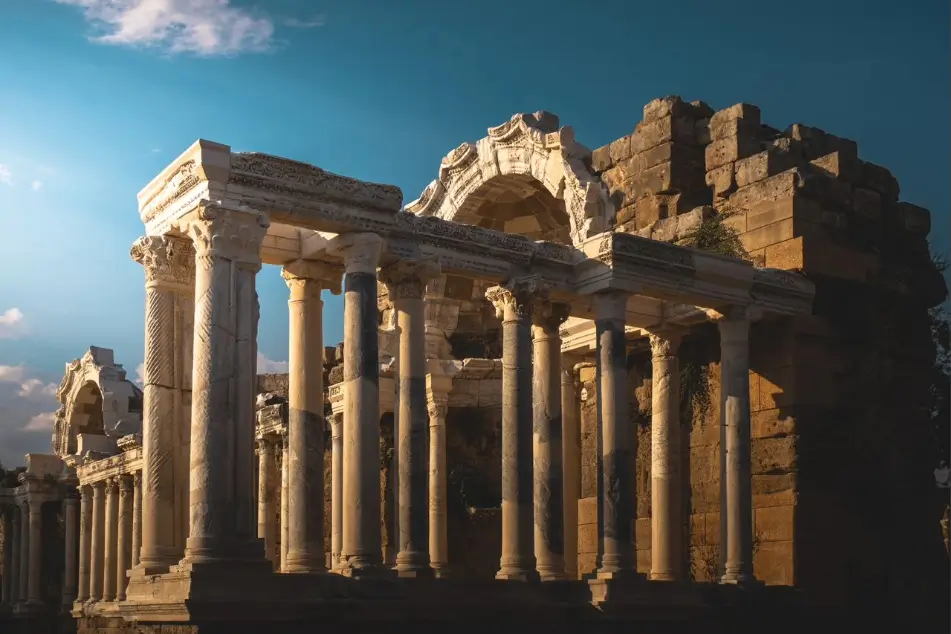
At the height of its power, Rome ruled a world stretching from mist-shrouded Britannia to the deserts of Egypt, from the forests of Germania to the shores of North Africa. Over the centuries, this vast expanse had been transformed into a living network of roads, fortresses, cities, laws, aqueducts and bridges — a world that seemed built for eternity. A civilization enters its autumn while it continues to build, and Rome is our first proof. While legions guarded the frontiers and magistrates judged according to the same principles from the Euphrates to the Atlantic, something unseen was changing within this apparently unshakable world: the empire had become so vast that no single man could encompass it, and governing it had become a question of survival.
In 284, Diocletian ascended the imperial throne, and a few years later, in 293, he responded to this reality with the reorganization now known as the Tetrarchy: four rulers, each with their own sphere of influence. It was an acknowledgement that the Roman world had changed, and that its center could no longer bear the entire weight of the empire alone. The empire felt the pressure and searched for a new balance, and the question rising from this attempt was the same one every empire would have to ask itself: When an empire changes its structure in order to survive, has its transformation already begun?
Geography changes history, and Constantinople, positioned between continents, seas, worlds, would become the center of a new imperial age for more than a millennium.
In 330, Constantine moved the center of the Roman world to the shores of the Bosphorus, where Europe and Asia look towards one another across the narrow waters linking the Black Sea to the Mediterranean. The city would come to be called New Rome, because the people of the empire that grew around it continued to regard themselves as Romans for almost a thousand years. Geography changes history, and Constantinople, positioned between continents, seas, worlds, would become the center of a new imperial age for more than a millennium.
Here, the city itself becomes the hidden character of this history. Byzantion became Constantinople, then the capital of the Eastern Roman Empire, then Ottoman Istanbul, while today the historic peninsula preserves successive pages of all these worlds — from Constantine’s Hippodrome to Hagia Sophia, from the Theodosian Walls to the Ottoman mosques rising above Byzantine churches. Built under Justinian between 532 and 537, Hagia Sophia became one of the great architectural expressions of the Byzantine world. Inside its immense dome, which seems suspended from the heavens, generations saw an image of divine power upon earth. Centuries later, the building became a mosque, its minarets rising around the great dome, and a single space came to hold within it imperial Rome, Christian Byzantium, Ottoman Islam and modern Turkey. Hagia Sophia asks a question that reaches far beyond architecture: how many histories can a single building contain, how many worlds can inhabit the same place without destroying one another?
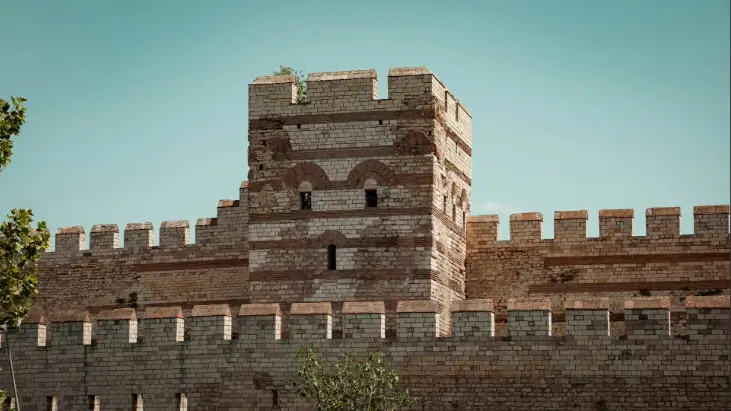
In 476, Romulus Augustulus was removed from the throne, and this date became the conventional marker for the end of the Western Roman Empire. The Roman Empire, however, continued to exist, for its eastern half would endure for almost another thousand years. The people of the medieval state centered on Constantinople continued to call themselves Rhomaioi — Romans — and saw themselves as the legitimate heirs of the Roman Empire. What we usually call the “fall” of an empire is often a passage into another world, under another name, carrying the same inheritance forward. Here our true autumn begins, as the empire gradually takes on a new form: Roman, Christian, increasingly Greek-speaking, medieval Byzantine.
This was an evolution that carried an ancient origin forward through centuries of change. What modern historians call “Byzantium” was, to its inhabitants, the Roman Empire, and this identity remained across the centuries despite visible changes in language, religion, political geography and the form of the state. Byzantium is perhaps the clearest proof that an empire can evolve while retaining the identity it had always claimed for itself.
On 29 May 1453, Mehmed II conquered Constantinople, and the Byzantine state passed into history. Its cultural world continued to exist, the city became the capital of the Ottoman Empire. The fade of an empire is not the end of a world.
A state may disappear while the world it shaped continues through culture, architecture, language and ritual.
A state may disappear while the world it shaped continues through culture, architecture, language and ritual. What dies politically may continue to live through culture, architecture, language and ritual. The city that witnessed so many transformations remain there, on the shores of the Bosphorus, a living testament to the fact that autumn is never the absolute end. Rome is our first autumn. Empires fade slowly, they continue to build, believe and hope even as their world begins to shift. Their autumn comes one September morning, when the center of the world begins to move, almost imperceptibly, towards another city, sea or age.
Empires fade slowly, they continue to build, believe and hope even as their world begins to shift.
THE OTTOMAN EMPIRE — OUR SECOND AUTUMN
The city that had kept its Roman name for a thousand years changed its destiny on a May morning, when the armies of Mehmed II entered the city and Constantinople became the capital of a new empire that would, over the centuries that followed, stretch across three continents. Mehmed took possession of the city, repaired it, repopulated it and reshaped it, building a new imperial capital upon the legacy of Constantinople. This continuity from Constantinople to Istanbul is one of the most compelling illustrations of how a city can survive the empires that rule it. What happens when one empire inherits another’s city: how does it inhabit it, reshape it and make it its own while preserving what came before?
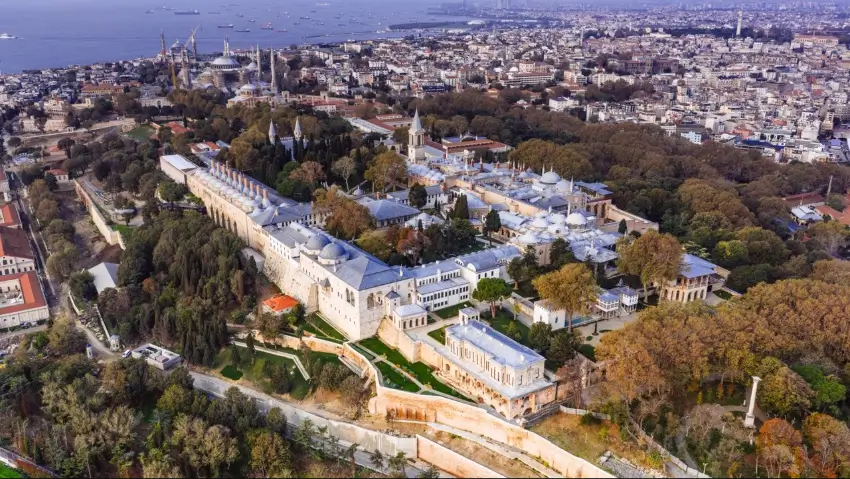
Then came Süleyman, who ruled from 1520 to 1566, and his reign marked the height of the Ottoman Empire’s political and military power. Ottoman armies conquered much of Hungary, advanced as far as Vienna, and the Ottoman fleet dominated the Mediterranean for a time. The apogee was not only military but cultural, for under Süleyman trade expanded, the arts flourished, and Mimar Sinan, the imperial architect, designed hundreds of buildings. The Süleymaniye Mosque in Istanbul and the Selimiye Mosque in Edirne remain expressions of a world that felt fulfilled, a world that believed the form it had given to its power could endure forever. At the height of its power, an empire builds with confidence in its own permanence. That conviction becomes all the more revealing when the world around it begins to change.
After Süleyman, the empire entered a period in which maintaining its place in a changing world became increasingly difficult. By the late eighteenth and early nineteenth centuries, geopolitical pressure on the empire had intensified, and Napoleon’s invasion of Egypt in 1798 altered the balance of power in the region. Ottoman sultans became increasingly concerned with reforming the army, finances and administration in order to protect the empire’s frontiers. Here begins the true Ottoman autumn: the empire remained powerful, while the world around it began to change faster than its old structures could adapt. This growing disparity would become one of the great tensions of the nineteenth century.
The Tanzimat, meaning roughly “reorganization”, began in 1839 with the Edict of Gülhane and continued until 1876. This broad program of reforms was focused, among other things, on the principles of justice and equality before the law, as well as the adoption of institutions inspired by Europe. The empire tried to save itself by changing. It was an imperial society searching for ways to survive, while reform reached into military, political, legal, social and cultural life.
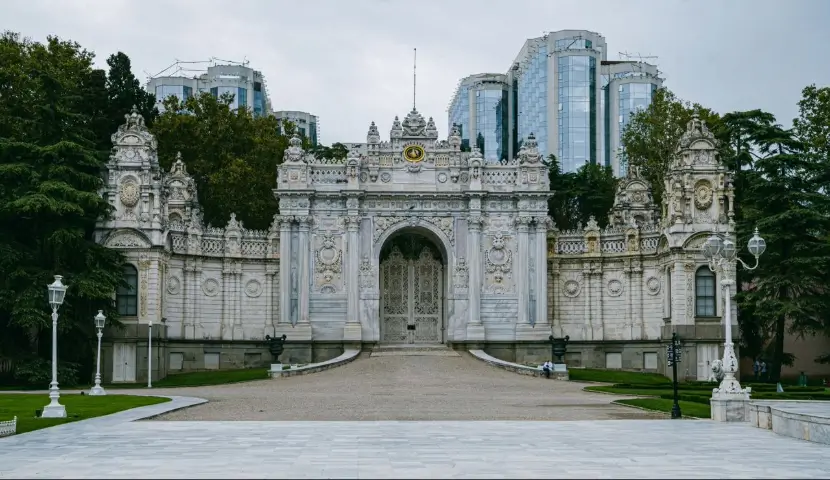
Istanbul changed with the empire, and one extraordinary example is Dolmabahçe Palace, built between 1843 and 1856 on the shores of the Bosphorus. It was a clear expression of European influences, with neo-Baroque architecture and interiors decorated with European objects. A striking contrast: Hagia Sophia, Topkapı, Süleymaniye, and then Dolmabahçe — the same city, but another world, a geography of change written along a single street of history. The Tanzimat culminated in 1876 with a constitution and parliament. The Russo-Turkish War of 1877–1878 changed the situation once again, as the war and the Treaty of Berlin led to the loss of important European territories. What remains from this period is a cycle of reform, hope, war, loss and reaction, a cycle that would repeat itself until the throne stood empty.
In the final decades of the nineteenth century and the beginning of the twentieth, new political ideas emerged. The empire attempted to find a political identity suited to a world in which nationalism was reshaping Europe and the Middle East. Here lies a crucial point: an empire built as a multi-ethnic and multi-religious structure was trying to survive in an age when the idea of the nation-state was becoming increasingly powerful. The empire entered the First World War on the side of the Central Powers, but after its defeat the imperial structure unravelled. The sultanate was abolished in 1922, and the caliphate was abolished two years later, in 1924, in the Republic of Turkey.
The end of an institution does not mean the disappearance of a civilization.
Istanbul remains. Its mosques, palaces, architecture and Ottoman culture continue to shape Turkey and many of the regions that once belonged to the empire. In 330, Constantinople became “New Rome”; in 1453, Constantinople became an Ottoman capital; in 1922, the Ottoman Empire faded; and today Istanbul still exists. Four moments, one city, three imperial worlds. An invisible thread running through this entire history: how does a city survive the worlds that built it?
From Hagia Sophia to Topkapı, from Süleymaniye to Dolmabahçe, each place tells another chapter in the city’s changing history: Hagia Sophia is the inheritance, Topkapı the consolidation, Süleymaniye the apogee, Dolmabahçe the adaptation and the Bosphorus the continuity.
Beyond the Bosphorus, we no longer see an empire, only a city... Empires disappear, but landscapes remember. The Ottoman Empire was apogee, pressure, adaptation, reform, fragmentation and transformation. Istanbul is the thread connecting all these worlds — Byzantine Constantinople becoming Ottoman Istanbul, and later modern Istanbul. This continuity is what makes it the discreet hero of all the autumns we have traced through this history.
Four moments, one city, three imperial worlds. An invisible thread running through it all: how does a city survive the worlds that built it?
When an empire fades, another world rises from its autumn.
QING — OUR THIRD AUTUMN
At the other end of Eurasia, another civilization was entering an autumn that would follow a very different path. In 1644, following the collapse of the Ming dynasty, a people from north-eastern Asia conquered China and established a new dynasty, which would become known as the Qing. The Manchus, the conquerors, soon discovered that governing an empire so ancient and so vast required them to learn the language of the civilization they had conquered. They adopted and adapted Chinese institutions, built a Confucian form of legitimacy, and ruled a multi-ethnic empire in which different identities and traditions had to be managed at the same time. A new empire survives by learning to speak in the language of the civilization it has conquered, and the image that emerges from this encounter is that of a Manchu emperor ascending the throne of China and adopting the rituals, language and symbols of an empire his own people had just conquered.
Under Kangxi, who ruled from 1661 to 1722, and later under Qianlong, who ruled from 1735 to 1796, the empire experienced a period of political stability, prosperity and extraordinary cultural activity. Qing territory expanded into Central Asia, Tibet and other regions. The empire controlled space, inscribing its authority upon the landscape, and Kangxi himself used imperial journeys to reinforce this image. In 1689, he undertook an inspection tour of southern China, climbed Mount Tai, inspected water-control works along the Yellow River and the Grand Canal, and visited important cultural and commercial centers. The empire displayed its landscapes; geography became a form of legitimacy, and this connection between power and place would remain one of the defining characteristics of imperial China.
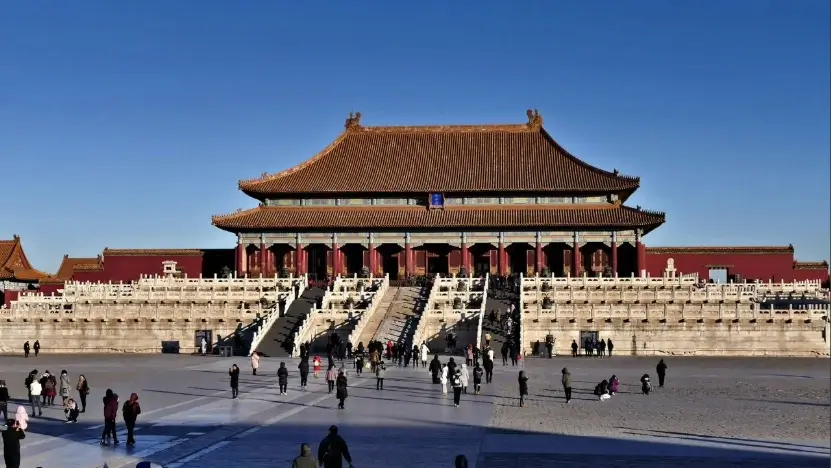
In the nineteenth century, Qing entered a different geopolitical world. Relations with the European powers, the opium trade and the wars that followed weakened Qing control over aspects of its sovereignty. The First Opium War took place between 1839 and 1842, and the Second between 1856 and 1860. The empire that had once stood at the center of an ancient political and cultural order now faced states and economic, military and legal systems unlike its own. The question emerging from this confrontation was an essential one: what happens when an empire discovers that the world around it has changed?
The crisis did not come from outside alone. The nineteenth century was also marked by enormous internal rebellions, and the most important for the history of the Qing Empire was the Taiping Rebellion, which lasted approximately from 1850 to 1864 and affected seventeen provinces. It has been described as one of the most significant events in nineteenth-century Chinese history. The empire was facing external pressure, wars, internal rebellion, administrative problems and the need for reform all at once. Qing tried to adapt even as its decline became increasingly difficult to halt.
Qing is the empire discovering that the world has changed.
After the military and political shocks of the nineteenth century came initiatives of modernization, including what became known as the Self-Strengthening Movement — an attempt to adopt Western technologies and methods, particularly in the military and industrial spheres, without abandoning the entire traditional order. Later, following defeat in the Sino-Japanese War of 1894–1895, pressure for institutional change became even stronger. In 1898 came an important attempt at reform associated with the Guangxu Emperor and his reformers, a brief movement that was ultimately blocked. The empire knew that the world had changed, and the question was whether it could respond quickly enough without destroying the structure it was trying to preserve.
How much can an empire change before it ceases to be the empire it is trying to preserve?
Here, however, the question takes on a more dramatic form, because Qing was confronting a world reorganizing itself faster than the empire could respond.
The Boxer Rebellion of 1900 is another visually powerful moment, for the movement expressed strong opposition to foreign influence, and after the intervention of foreign powers, the Qing court was forced to leave Beijing for a time. What followed may be the most significant phase of this transformation, because after 1900 the Qing court itself increasingly recognized the need for fundamental reforms. Administrative, educational and constitutional changes were introduced. In 1909, provincial assemblies appeared, and in 1910 a consultative National Assembly was convened. In its final decades, the empire once again attempted to reform itself from inside. This late attempt captures the poignancy of an empire struggling to find a way forward at the edge of its own disappearance.
In 1911, the revolution brought Qing rule to an end. The last emperor, Puyi, abdicated in early 1912, and China entered the republican era. The empire faded, but what it had created continued to exist: Qing left behind territories, institutions, works of art, archives, cities, administrative traditions and an idea of imperial China that did not disappear with the throne. The state disappeared while the world it had shaped continued to live on through landscape, architecture, language, rituals and the memories of its people.
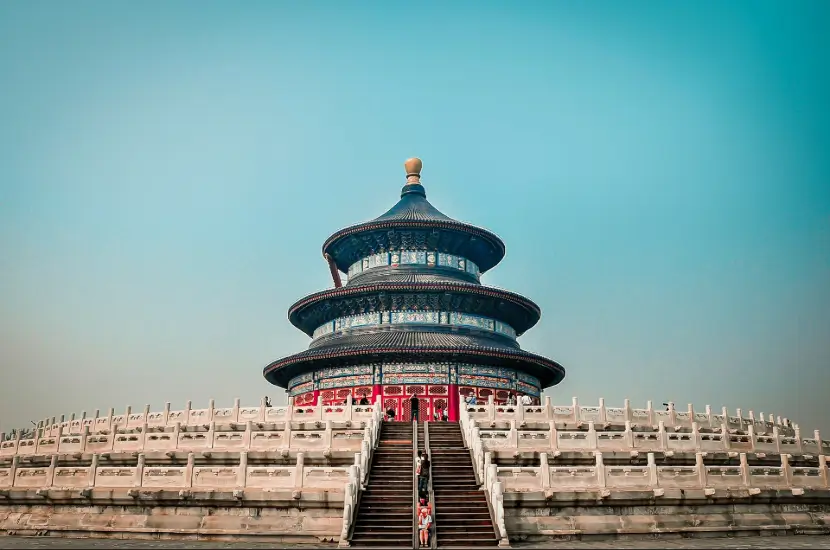
Rome is the center that moves. Byzantium is the empire that survives by becoming something else. The Ottoman Empire is power learning to adapt. And Qing is the empire discovering that the world has changed.
When does an empire begin to disappear? When the order of the world in which it was built no longer exists. The autumn of an empire is a slow, almost imperceptible process, beginning when the world around it moves beyond the structures built to govern it.
When an empire fades, another world rises from its autumn.
We have crossed four imperial worlds and witnessed four ways in which a world can change, and each has taught us something about the way time works upon power, cities and the people who inhabit them. Rome showed us that the center can move without the empire disappearing. Byzantium showed us that a name can survive the autumn that has overtaken it. The Ottomans showed us that power can learn to adapt. And Qing showed us that an empire can discover, perhaps too late, that the world around it has changed. All these autumns gather into one. Every empire that fades leaves behind a light that changes colour.
Autumn is the moment when empires become pages of a manuscript rewritten many times upon the same parchment. Rome left behind infrastructure, laws, cities and institutions. Constantinople continued as Istanbul, its Roman, Byzantine and Ottoman pages coexisting within the same city. Byzantium disappeared as a state in 1453, yet its culture continued to shape the Eastern Christian world, and reached into the Islamic world and the Latin West. The Ottoman Empire disappeared, but Istanbul, its architecture and its institutions remain part of the cultural landscape of the region. Qing came to an end between 1911 and 1912, but left behind institutions, art, archives and an imperial configuration that would continue to shape modern China. Empires disappear politically, while the spaces they shaped continue to exist — a history of decline, adaptation and inheritance and of the ways in which people carry the past forward.
Autumn is the moment when empires become pages of a manuscript rewritten many times upon the same parchment.
Looking towards Rome, Istanbul and imperial China, we find ourselves asking what remains of us as we change, what we preserve as the world around us shifts and what we inherit and leave behind. Autumn is the season that teaches this most clearly. It is a season of withdrawal, preparing the way for another form of life. Leaves fall, but the roots remain. Empires fade, but cities, languages, architecture and rituals remain. What disappears politically can continue through culture, architecture, language and the people who inhabit the places once shaped by empires.
An Atlas of Autumn. A geography of change.
Its pages hold a world in which every ending conceals a beginning, every sunset prepares another light and every empire that has faded from the political map continues to live through the stories it passed on. We have crossed four imperial autumns, but the autumn that gathers them all is the autumn inside us. Each of us becomes, at some point, an empire in transition, a world withdrawing in order to prepare for another season.
When an empire fades, another world rises from its autumn.
Sources
Reference source — Roman Empire The Roman Empire (27 B.C.–393 A.D.) – Christopher S. Lightfoot (2000) . Via The Metropolitan Museum of Art 🔗
Reference source — Byzantine Empire Byzantium (ca. 330–1453) – Sarah T. Brooks (2001, revised 2009) . Via The Metropolitan Museum of Art 🔗
Reference source — Late Byzantine Constantinople Constantinople after 1261 – Annie Montgomery Labatt (2004) . Via The Metropolitan Museum of Art 🔗
Reference source — Byzantine cultural legacy Byzantium: Faith and Power (1261–1557) – Various authors (2004) . Via The Metropolitan Museum of Art 🔗
Reference source — Ottoman Empire under Süleyman The Age of Süleyman “the Magnificent” (r. 1520–1566) – Suzan Yalman, based on original work by Linda Komaroff (2002) . Via The Metropolitan Museum of Art 🔗
Reference source — Ottoman cultural and artistic legacy The Art of the Ottomans before 1600 – Suzan Yalman (2002) . Via The Metropolitan Museum of Art 🔗