In the heart of November, autumn interrupts its departure, as if it still had something to entrust to the world, granting it one last ray of gentleness before wrapping it in cold and fallen leaves. People have known this pause down the centuries, named it, awaited it and received it as a gift. Legend preserves the story of a man who, on a frosty autumn day, split his cloak in two to cover a poor man. St Martin’s Summer thus becomes a feast of generosity, a lesson in the warmth born of a simple gesture: that of sharing. In this story two forms of light meet: the light of the sky and the light a person can kindle in another’s soul.
St Martin’s Summer thus becomes a feast of generosity, a lesson in the warmth born of a simple gesture: that of sharing. In this story two forms of light meet: the light of the sky and the light a person can kindle in another’s soul.
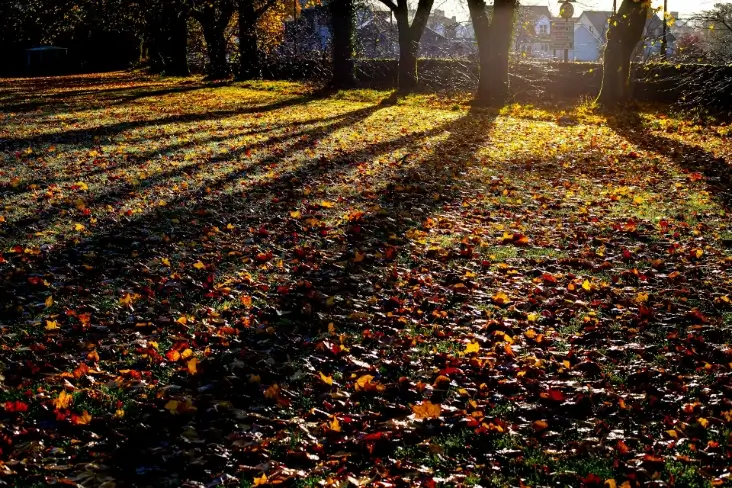
Late autumn has a light of its own. The sun sinks lower in the sky, its rays lengthen and touch the earth only in passing, and shadows stretch across the fields like fingers that seem to draw the distance between day and night. Its glow takes on a golden, dense, almost tangible quality, and every hour seems to prolong its own significance.
The rays now carry the beauty of transient things: a gleam that settles on walls, on water and on faces, like a last touch before autumn slowly releases its hold on the earth.
St Martin’s Summer finds its essence precisely in this meeting of radiance and the turning of the seasons. It is a rare moment, set between two seasons, when the sky seems to forget the succession of days and grants the earth a few moments of stillness. From this unexpected indulgence of nature there has grown, over time, a meaningful interpretation: light retains its power to warm even when the days grow shorter, and the warmth offered to another remains a gift.
The Legend and the Gesture
The story begins in the fourth century, in Pannonia, in what is now Hungary, where Martin is born, the son of a Roman officer. As a young man, Martin serves in the imperial guard, and one autumn day, as he rides near Amiens, he meets a shivering beggar covered only in rags. Without a moment’s hesitation, he draws his sword, cuts his woollen cloak in two and offers half of it to the shivering man. That night, in a dream, Christ appears to him wearing the half-cloak he had given away, saying: ‘Martin, what you give to your neighbour in distress, you give to Me.’ From a soldier’s gesture is born one of the most enduring symbols of Christian compassion. After renouncing military life and becoming Bishop of Tours, Martin remains known as Martin the Merciful, a name in which, over the centuries, the very essence of his generosity has been concentrated.
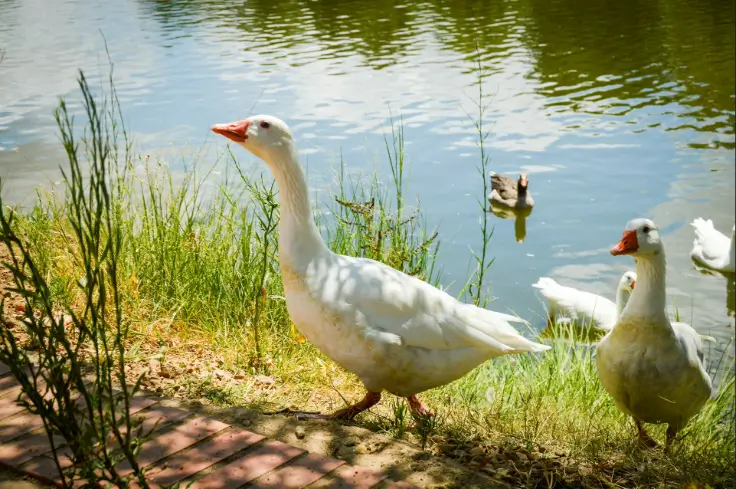
Legend also says that, when he was chosen bishop, Martin considered himself unworthy and hid in a stable full of geese, and the birds betrayed him by their clamour, so that he was found and brought before the community. From this, it is said, comes the custom of eating goose at St Martin’s, a tradition that has survived in European cooking to this day. Beyond this picturesque episode, there endures the image of a man who understood that true wealth lies in what one gives. The cloak split in two remains one of the most powerful metaphors of giving: half a garment that warms a body, and a kindness that, once shared, increases its power.
A Truce of the Sky
St Martin’s Summer is, above all, a natural phenomenon traditionally associated with the first half of November, whose return people await year after year. Around this unexpected return of mild days two interpretations have taken shape over time, each opening a distinct perspective on the world.
The first gate opens towards science. Meteorologists speak of a ‘singularity’ of the European autumn, a period of mild, clear weather that returns with an almost ritual regularity. The explanation lies in the extension of the Azores anticyclone from Spain towards the Mediterranean and Central Europe, bringing warm air and stable atmospheric pressure at high altitudes, while in the lowlands, morning mists may linger and dew may still glisten in the cold. It is an indulgence of the sky, a brief delay of winter that allows autumn to say its farewell with dignity. The phenomenon has its own name across much of Europe— été de la Saint-Martin in French, St Martin’s summer in English, Estate di San Martino in Italian — and has long been woven into the seasonal traditions of many European cultures.
The second gate opens towards faith. Legend says that this unexpected warming first occurred at the death of St Martin, in the year 397, when, as his body was carried along the Loire towards Tours, a wave of warmth made the banks turn green again and the fruit trees blossom. For the faithful, the late summer thus takes on a spiritual meaning: the sky itself is said to have taken part in the mourning of the people, granting the earth a moment of consolation. In this interpretation, the gentle sun becomes the sign of a mercy that embraces the whole world, and nature seems to share in human sorrow and hope.
The two explanations converge in a moment where reason and faith each retain the beauty of their own perspective. Whether we look at it through the lens of science or that of faith, St Martin’s Summer remains a gift of late autumn, an unexpected return of gentleness when the cold begins to make itself felt. The meteorologist sees the anticyclone; the believer sees the hand of Providence; the poet can hold both, without feeling the need to choose. The reader is left free to discover their own truth in this meeting of sky, nature and soul.
The two explanations converge in a moment where reason and faith each retain the beauty of their own perspective.
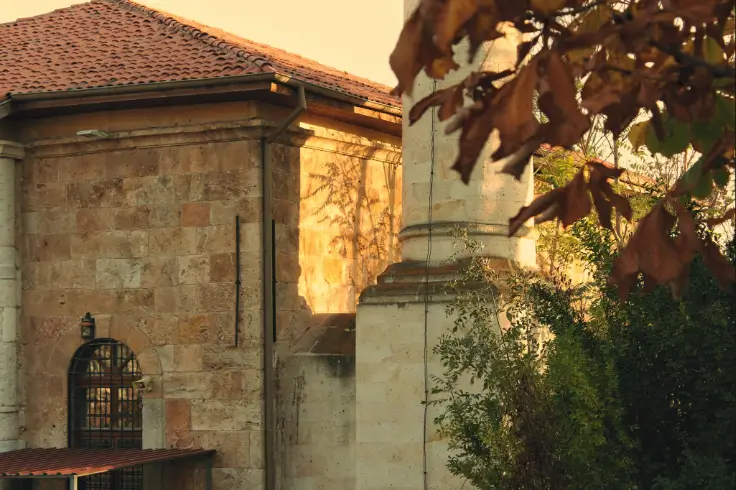
This gentleness of light is, in fact, one of the great gifts of the feast. The sun sinks towards the horizon and pours out its light from an oblique angle; the rays slip across rooms, drawing shifting shapes on the walls, like a painter working with a single ray. Shadows lengthen behind people and trees, and the air acquires a transparency that makes every detail seem drawn with a fine line. The landscape takes on a beauty of its own: walls hold the sun’s gold for a few moments, and the wind carries over the fields the last breath of warmth.
The Time of a Last Gentleness
In late autumn, people become more attentive to the small gifts of the day. They hurry through their tasks to keep as much as possible of the last hours of sun, throw the windows wide open at noon, letting the warmth into their houses, and look at the sky in the morning, trying to make out what the day holds. St Martin’s Summer intensifies this closeness to nature. For a few days the season seems to postpone its departure, and people rediscover the joy of a warmth they had thought lost. Its beauty lies in its transience, in the delicacy of a promise whose duration remains uncertain.
Here giving comes into play. The cloak cut in two is an act of compassion: a man who chooses to share his own warmth so that another may no longer feel the cold. Nature, in turn, seems to echo this act on a cosmic scale: the sky offers the earth a few days of gentleness, and people carry the same lesson forward through their own deeds. Bonfires lit on St Martin’s Night are lights given to the community, lanterns carried by children through the streets are lights given to passers-by, tables spread are warmth given to those we love. Around such gestures a gift is born, whose value grows precisely through sharing: the more it is shared, the stronger it becomes.
Nature, in turn, seems to echo this act on a cosmic scale: the sky offers the earth a few days of gentleness, and people carry the same lesson forward through their own deeds.
Perhaps that is why St Martin’s Summer finds its natural place in our edition devoted to late autumn. It speaks of the way people discover the beauty of transient things and of the generosity that can prolong their meaning. The diffuse light of November, the long shadows and the warmth that lingers for a few more days make up the setting of a story about kindness. And the gesture, whether it is a cloak cut in two, a fire lit on a hill or a table shared with those we love, remains a testimony to the fact that some gifts continue their journey long after the moment in which they were offered has passed.
The diffuse light of November, the long shadows and the warmth that lingers for a few more days make up the setting of a story about kindness.
A Feast of Harvest and Community
In Europe, 11 November is not only a religious feast but also a landmark of the agricultural year. In the Middle Ages it marked the end of the harvest, the payment of rent and the time when animals were slaughtered to provide food for the winter months, and the community gathered for a feast before the Christmas fast. In Italy, at St Martin’s, new wine is tasted, chestnuts are roasted and bonfires are lit, and children build scarecrows from hollowed-out pumpkins, in a ritual that blends the echo of autumn with exuberant cheer, with carnival-like accents. In Germany, Austria and the Czech Republic, children walk the streets with coloured lanterns, singing songs dedicated to the saint, in a procession of light that crosses the ever-longer evenings. The lanterns have a symbolism of their own: they evoke the lights carried by those who went in search of Martin and also recall the power each person has to carry a ray of light through the darkness of evening. They are small torches of the community, carried by children and shared with all those met along the way.
In the Romanian lands, the heritage is equally rich. In Transylvania and Banat, goose is eaten at St Martin’s and cloudy new wine is drunk, and in the German villages of Transylvania children go out with lanterns and sing carols, in a feast of community and human warmth. The Romanian folk calendar preserves the ‘Autumn Martinmas’, three days of celebration around 13 November, on which predictions are made about the coming winter: if the water does not freeze by St Martin’s Day, the winter will be mild; if the sky is clear, the wheat will thrive. This peasant wisdom links sky to earth, present to future, and man to the natural succession of the seasons. In the signs of the weather, people of old sought answers about harvests, seasons and the meaning of what was to come.
The lanterns have a symbolism of their own: they evoke the lights carried by those who went in search of Martin and also recall the power each person has to carry a ray of light through the darkness of evening.
The Meaning of a Threshold
Beyond traditions and meteorological explanations, St Martin’s Summer remains a metaphor for the generosity that sweetens, for a moment, the harshness of the season. The cloak cut in two is the gesture of a man who chooses to share his warmth, and this choice is found in every chestnut offered, in every lantern carried through the street, in every table at which loved ones gather. In a world that scatters its attention in a thousand directions, the feast invites us to pause and reflect, rediscover old rituals and embrace the simple joy of gathering around the same table, where human closeness acquires value and generosity expresses itself through the most ordinary things.
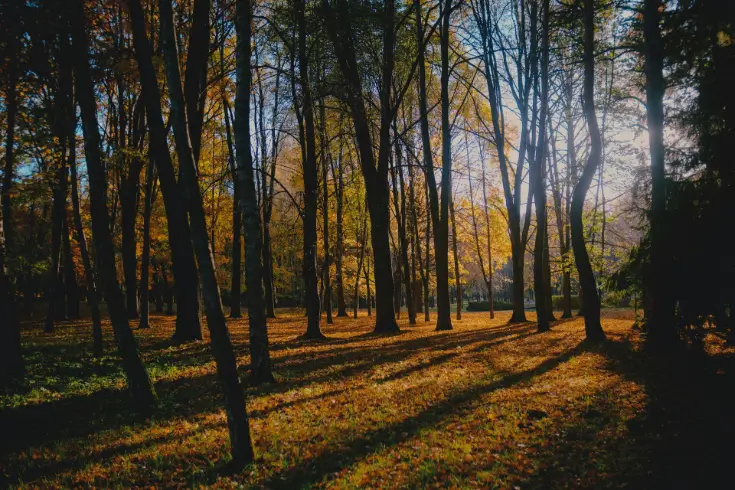
If this edition’s essay captures the diaphanous charm of mist, of fields wrapped in the autumn's atmosphere and of days that grow shorter, St Martin’s Summer brings to this landscape a counterpoint of warmth and communion. Together, the two texts outline a November of contrasts: on the one hand, nature preparing for winter; on the other, people finding in generosity the power to keep warmth alive. Within this landscape, the reader is invited to discover that late autumn carries within it a beauty of its own: that of things passing, leaving behind gestures, stories and gifts that continue to light the way for others.
Beyond traditions and meteorological explanations, St Martin’s Summer remains a metaphor for the generosity that sweetens, for a moment, the harshness of the season.
Sources
Sulpitius Severus, On the Life of St. Martin, Chapter III 🔗
St. Martin of Tours and Armistice Day (November 11) 🔗
St. Martin of Tours and Armistice Day (November 11) 🔗
Lanterns, Songs And Other Customs: St. Martin's Day 🔗
Martini summer in sight! 🔗
Summer weather during autumn 🔗
St. Martin's Day 🔗
Lantern processions for St. Martin’s Day 🔗
Saint Martin: Traditions, Cultural Identity, and Contemporary Relevance in Europe and Romania 🔗
Vin și carne de gâscă, de ziua Sfântului Martin (English translation provided) 🔗
Summer weather during autumn 🔗
BBC Weatherman Ian Fergusson’s Blog: An Indian Summer? Not quite yet... 🔗
Is this really an Indian summer? 🔗